Is Your Period Property Painter Using the Wrong Materials? Here's the Truth
- Lewis Mitten
- Feb 8
- 6 min read
Most painters working on period properties in Cheltenham and the Cotswolds are making the same fundamental mistake.
They're using modern paints designed for plasterboard and cement render on Georgian lime plaster and Cotswold stone.
The results are predictable. Bubbling paint within twelve months. Damp patches appearing where none existed before. Salt deposits bleeding through fresh coats. Surfaces that deteriorate faster after decoration than before it.
This isn't about aesthetics or colour choice. It's about understanding how historic buildings actually work.
Why Breathability Matters in Period Properties
Historic buildings were constructed to move.
Lime mortar flexes with seasonal temperature changes. Stone and brick absorb and release moisture constantly. Original lime plaster acts as a buffer, drawing moisture from walls and allowing it to evaporate safely into the room.
Modern acrylic and vinyl paints create an impermeable skin over these surfaces.
Moisture becomes trapped within the wall structure. It finds the weakest point and forces its way out, taking paint, plaster, and sometimes sections of substrate with it.
This is particularly problematic in Cheltenham's Regency properties, where walls are often solid stone or brick with no cavity, and in Cotswold vernacular buildings constructed from porous limestone.
The wall needs to breathe. A standard trade paint won't allow it.
The Material Mistakes Most Painters Make
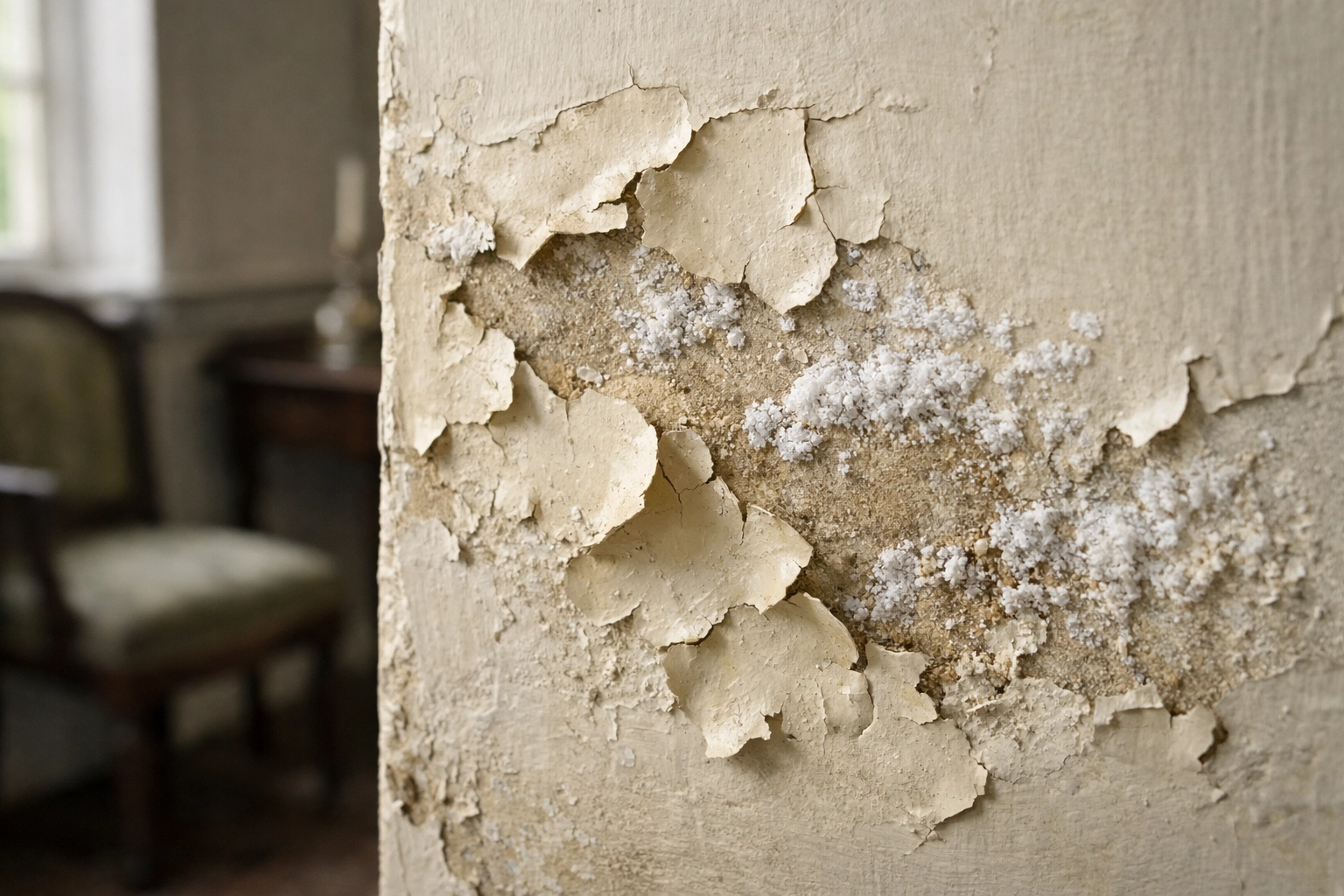
Vinyl emulsion on lime plaster. The most common error across period properties. Vinyl sits on the surface and eventually delaminates as moisture pressure builds behind it. You'll see this as paint lifting in sheets, often starting at the skirting line where rising damp first encounters the impermeable barrier.
Acrylic masonry paint on soft stone. Applied with good intentions to 'protect' the facade, but it accelerates decay. Water enters through small cracks, becomes trapped, freezes in winter, and expands. The stone face begins to spall: flaking away in thin layers.
Standard wood primer on historic joinery. Modern primers are designed for kiln-dried timber with consistent moisture content. Original windows and doors are old-growth timber that expands and contracts significantly. Incompatible primers crack and allow water penetration at the points where protection matters most.
Cement-based fillers on lime plaster. Harder than the substrate they're meant to repair. Cracks re-appear around the repair within months because the rigid filler can't flex with the softer plaster movement.
These aren't theoretical concerns. We encounter them on roughly seven out of ten period properties we quote for.
What Actually Happens When Materials Are Wrong
The timeline is fairly consistent.
Year one: the finish looks acceptable, perhaps even good. Any issues are attributed to 'settling' or 'old walls being difficult.'
Year two: small bubbles appear, usually in specific areas: chimney breasts, external walls, anywhere moisture is naturally higher. Paint begins to lift at edges.
Year three: the deterioration accelerates. What started as small blisters becomes large areas of failure. Damp patches appear. Salt deposits (efflorescence) push through the paint surface as minerals are drawn out by trapped moisture.
Year four onwards: the underlying substrate begins to fail. Plaster becomes soft and friable. Stone surfaces start to spall. Wood develops rot in areas that were previously sound.
The financial implication is straightforward. Instead of redecorating every eight to ten years: the reasonable expectation for properly specified materials: you're addressing failures every two to three years, often with additional repair costs for substrate damage that wouldn't have occurred with breathable systems.
The Correct Materials for Period Properties
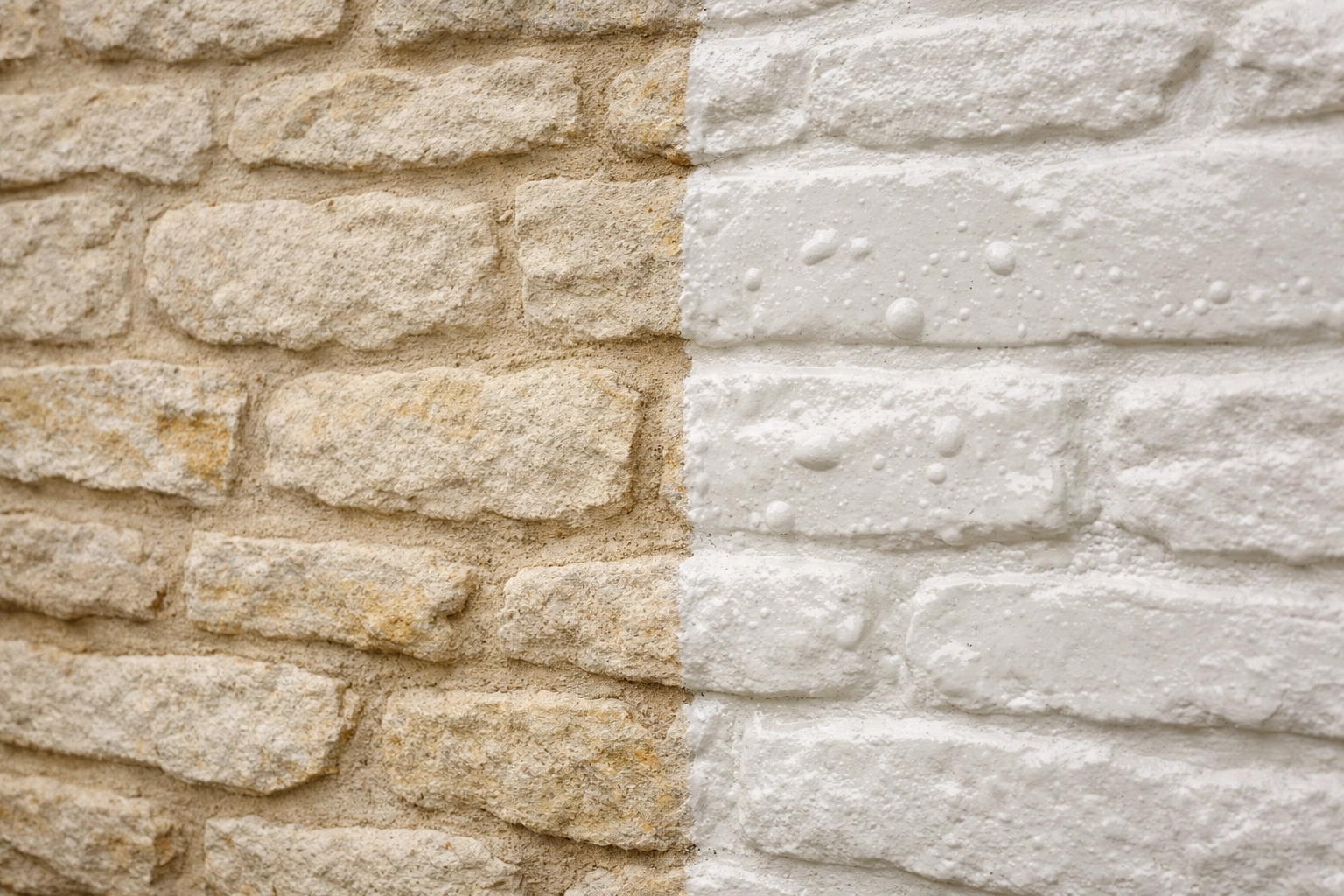
Limewash. The traditional choice for historic masonry and the most breathable option available. Pure slaked lime with natural pigments. No synthetic binders, no acrylics, no plasticisers. Limewash actually carbonates back into the substrate, becoming part of the wall rather than a coating on top of it.
Appropriate for: external stone and brick, internal lime plaster, rough-textured historic surfaces.
Mineral silicate paints. Modern formulations that achieve breathability through chemistry rather than tradition. They bond molecularly with mineral substrates: lime plaster, stone, brick, cement render. Water vapour passes through freely, but liquid water cannot penetrate.
Appropriate for: smooth internal plaster, external masonry requiring higher durability than limewash, historic buildings where limewash texture isn't desired.
Natural resin emulsions. Clay-based or plant-oil formulations with none of the acrylic or vinyl content of standard paints. Properly specified versions maintain breathability while offering better coverage and durability than limewash for internal work.
Appropriate for: internal walls where a conventional matt finish is required, spaces with higher wear like hallways and landings.
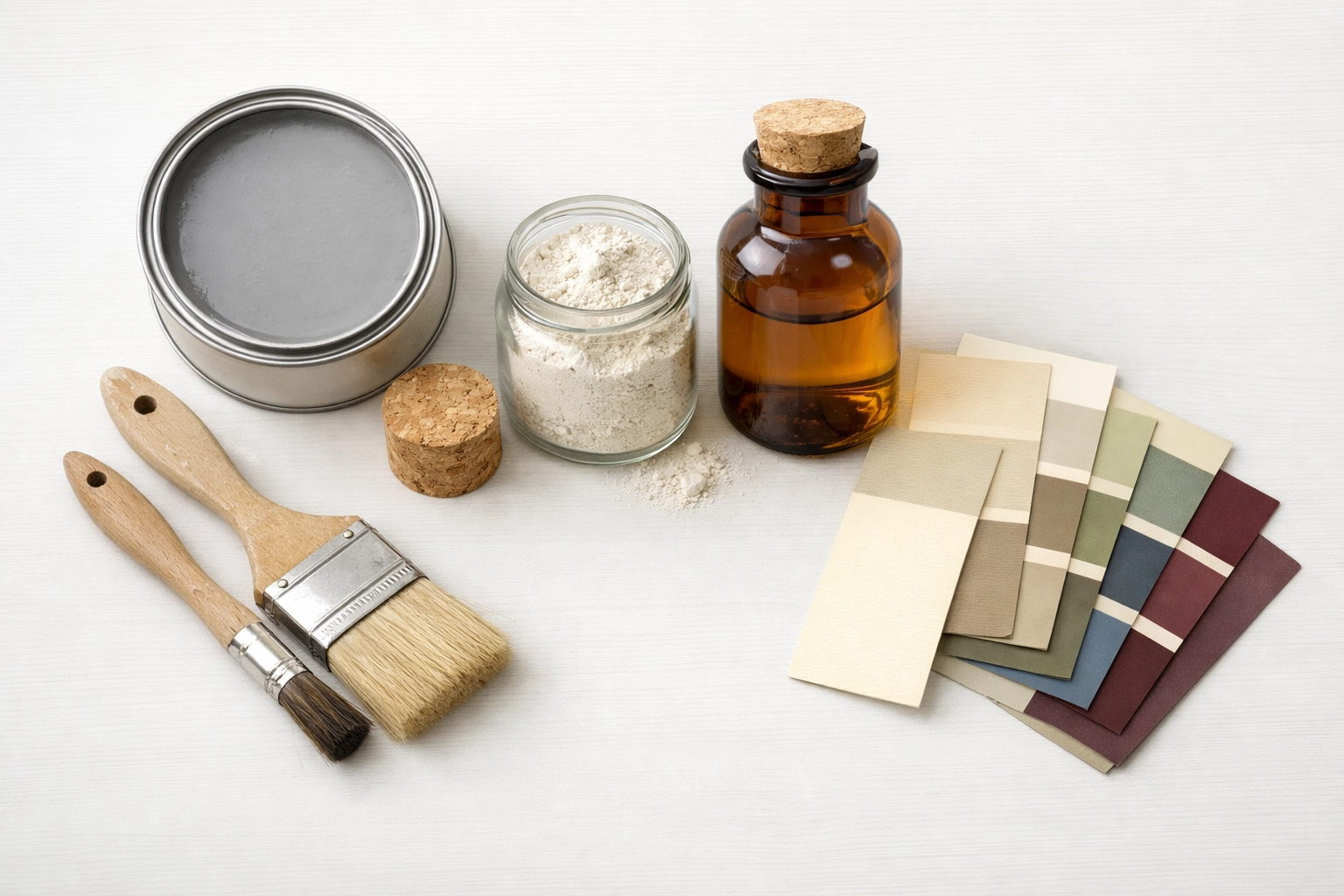
Linseed oil paints for joinery. Traditional wood finishes that flex with timber movement. Slower drying than modern alternatives but infinitely more compatible with historic windows, doors, and architectural details.
Appropriate for: all external joinery on period properties, internal doors and details where durability matters.
The material choice isn't about authenticity for its own sake. It's about selecting coatings that work with the building's original design rather than against it.
Substrate-Specific Considerations
Different surfaces require different approaches, even within the same property.
Lime plaster walls require alkaline-resistant primers if using modern paint systems, or preferably limewash or mineral paints applied directly. Never seal lime plaster with vinyl primer: a mistake we regularly see that creates immediate breathability issues.
Cotswold stone facades vary considerably in porosity depending on which quarry the stone originated from. Guiting stone is harder and less porous than Farmington stone. Material selection needs to account for this variation. Soft stones particularly benefit from limewash, which consolidates and strengthens the surface while maintaining breathability.
Historic timber often contains tannins and resins that bleed through modern paint systems, causing brown staining. Oil-based primers block these effectively; water-based primers generally don't. The species matters: oak requires different treatment than deal or pine.
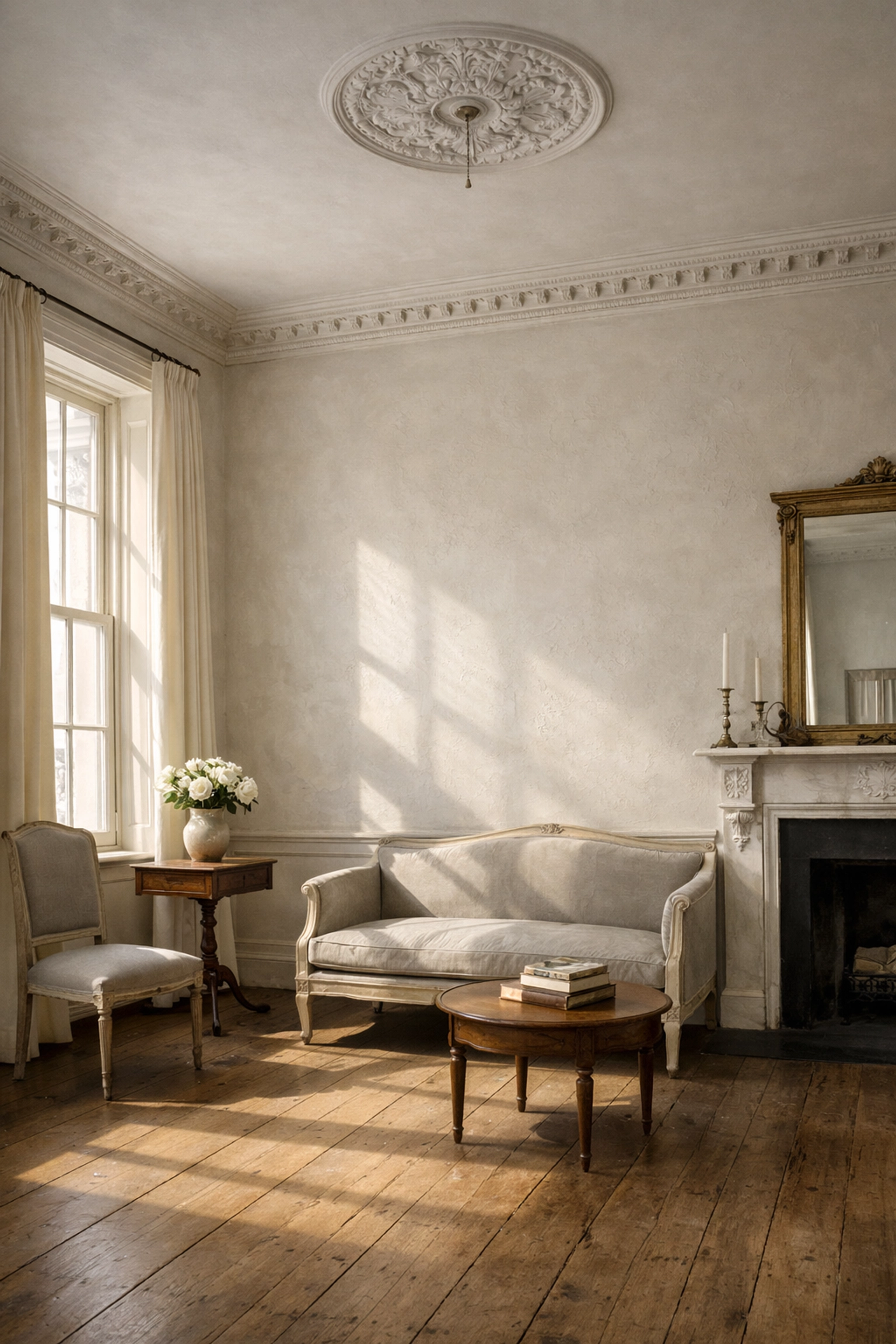
Decorative plasterwork and cornicing should never receive modern vinyl emulsion. These elements were designed to be finished in limewash or distemper. Mineral paints work well as a compromise between authenticity and practicality. Heavy acrylic paints obscure fine detail and sit poorly on the inevitably uneven historic surfaces.
Why This Particularly Matters in Cheltenham and the Cotswolds
Our regional building stock has specific characteristics that amplify material compatibility issues.
Cheltenham's Regency terraces and villas were built rapidly between 1800 and 1840, using lime mortar and plaster throughout. Solid wall construction with no damp-proof courses. External render systems that rely entirely on breathability to manage moisture. These buildings have survived two centuries by being allowed to breathe.
Cotswold vernacular properties often combine soft limestone rubble walls with lime mortar joints. The stone itself is porous. Modern impermeable coatings accelerate the very decay they're meant to prevent. We've seen seventeenth-century cottages that survived three hundred years without issue develop serious structural problems within a decade of being painted with the wrong materials.
Listed building status adds another dimension. Many period property painters and decorators in Cheltenham work without understanding consent requirements. External material changes often require Listed Building Consent. Using the wrong paint system can result in enforcement action and costly remedial work.
Conservation officers across Gloucestershire increasingly specify breathable paint systems in consent conditions. The painter who arrives with vinyl masonry paint and acrylic primer isn't just using inappropriate materials: they're proposing work that may require consent they haven't obtained.
How to Verify Your Painter Understands Materials
Ask specific questions before you instruct any work.
"What paint system will you use on the lime plaster?" If the answer doesn't mention breathability, permeability ratings, or the term 'mineral paint,' proceed with caution.
"How will you address moisture movement in solid stone walls?" The correct answer involves understanding vapour permeability and selecting coatings accordingly. Responses about damp-proof injections or waterproof sealers suggest fundamental misunderstanding.
"Which primer will you use on the original windows?" This should prompt discussion of oil-based versus water-based systems, tannin-blocking properties, and compatibility with the topcoat. Vague answers about 'standard undercoat' indicate insufficient technical knowledge.
Request a written specification listing exact products: manufacturer, product line, and specific variant. "Dulux trade emulsion" isn't adequate. "Keim Ecosil-ME mineral paint system" or "Earthborn Claypaint in Soft Grey" demonstrates proper material selection.
Check their experience with heritage properties specifically. General decorating experience doesn't transfer to period property work. The skills are adjacent but not identical.
The Long-Term Implications
Compatible materials extend the lifespan of period property finishes from three years to ten years or more.
They prevent substrate damage that would otherwise require expensive repair. They maintain the building's ability to manage moisture naturally rather than forcing it into destructive patterns.
They typically cost fifteen to thirty percent more than standard paint systems initially. They save several hundred percent over a ten-year period by eliminating premature failure and the associated repair costs.
Most significantly, they preserve the building itself. Period properties throughout Cheltenham and the Cotswolds represent irreplaceable architectural heritage. Using appropriate materials isn't precious historical purism: it's practical building conservation that protects your investment and maintains the regional character that makes these properties valuable.
The question isn't whether your painter is using the wrong materials. The question is whether they understand the difference well enough to use the right ones.
If you're uncertain, request a materials specification in writing before work begins. An experienced heritage decorator will provide this as standard practice.
For properties requiring specialist attention: listed buildings, significant Regency architecture, or Cotswold stone construction with existing issues: consider engaging painters and decorators with specific period property experience.
The right materials, properly applied, are the difference between decoration that lasts and decoration that fails. In period properties, that difference matters more than most owners realise until they're addressing premature failure.
Choose accordingly.

Comments